



Tesla Model 3 & Model Y Suspension Strut Noises, Failures, and Replacement (2017-2026)
This guide covers the common clunks, creaks, and failures of the suspension struts on the 2017-2026 Tesla Model 3 and 2020-2023 Tesla Model Y, with a focus on RWD models.
- Compatibility is critical: Most struts fit Rear-Wheel Drive (RWD) models ONLY and are not interchangeable with All-Wheel Drive (AWD) versions.
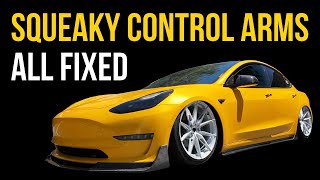
- Clunks and creaks are common symptoms, but noises can also come from failing control arms, a very common issue on the Model 3 and Y.
- A visible fluid leak on the strut body means it has failed and must be replaced immediately.
- A wheel alignment is mandatory after replacing a strut to prevent poor handling and rapid tire wear.
Critical Compatibility Warning: RWD vs. AWD
Warning: The most important thing to know when buying a replacement suspension strut for a 2017-2026 Tesla Model 3 or 2020-2023 Tesla Model Y is the vehicle's drivetrain. Most standard replacement struts are designed for Rear-Wheel Drive (RWD) models ONLY. They will not fit All-Wheel Drive (AWD) or Dual Motor vehicles, which use a different suspension geometry. Always verify your vehicle is RWD before purchasing.
Symptoms of a Failing Suspension Strut
Because Teslas are so quiet without an internal combustion engine, suspension noises are much more noticeable. A failing strut can produce a variety of sounds and handling problems. It's also common for other worn suspension parts, like control arms, to create similar noises, so proper diagnosis is key.
- Clunking or Banging Noises: This is the most common sign of a bad strut. You'll hear a hollow clunking or banging sound when driving over bumps, potholes, or uneven road surfaces. This is caused by worn internal components or a failing strut mount.
- Creaking or Groaning When Turning: A creaking, groaning, or binding sound when turning the steering wheel at low speeds can point to a worn strut bearing or mount. However, this sound is also a notorious symptom of failing front upper control arm ball joints on these vehicles, which is a very common issue.
- Excessive Bouncing: After hitting a bump, a car with a bad strut will continue to bounce up and down instead of settling quickly. This indicates the shock absorber portion of the strut is no longer damping suspension movement effectively.
- Nose-Diving and Squatting: If the front end of the car dips excessively when you brake hard, or the rear end squats during acceleration, the struts are likely worn out and failing to control the vehicle's weight transfer.
- Fluid Leaks: The strut is filled with hydraulic fluid. If you see oily fluid leaking down the side of the strut body, its internal seals have failed and it must be replaced.
- Uneven Tire Wear: Worn struts can cause a specific type of uneven tire wear called "cupping" or "scalloping," which appears as high and low spots across the tread. This happens because the tire is bouncing as it goes down the road instead of maintaining firm contact.
Known Issues, Recalls, and Technical Service Bulletins (TSBs)
While there haven't been recalls specifically for the struts themselves, several recalls and TSBs for related suspension components on the Model 3 and Model Y are important to be aware of, as they can cause similar symptoms or affect the strut replacement process.
Recall: Loose Front Suspension Lateral Link Fasteners
In October 2021, Tesla issued a recall for approximately 2,791 vehicles, including 2019-2021 Model 3 and 2020-2021 Model Ys (NHTSA Campaign: 21V835000, Tesla Recall: SB-21-31-003). The fasteners connecting the front suspension lateral link (a lower control arm) to the subframe could loosen. This could cause a shift in wheel alignment, instability, and an increased risk of a crash. Owners might hear an abnormal noise from the front suspension. The fix involves having Tesla service inspect and tighten or replace the fasteners.
TSB: Creaking Front Upper Control Arms
A very common complaint on these vehicles is a loud creaking or groaning sound from the front suspension, especially when turning at low speeds. This is often caused by water getting into the front upper control arm's ball joint, leading to corrosion. Tesla released Technical Service Bulletin SB-20-31-006, which details a procedure to reseal the ball joint area with urethane to prevent water intrusion. Tesla considers this a noise, vibration, and harshness (NVH) issue, not a safety failure, but many owners and shops opt to replace the entire control arm. 🎬 Watch: How to fix that annoying dry door hinge squeak. This sound is frequently misdiagnosed as a strut problem.
Buying a Used Tesla Suspension Strut: What to Look For
A used OEM strut can be a great value, offering original factory quality for significantly less than a new part. However, since it's a wear item, careful inspection is crucial.
- Verify Compatibility: First and foremost, confirm the part is from a Rear-Wheel Drive (RWD) vehicle if that's what you have. An AWD strut will not fit. Double-check the part number against the provided list.
- Check for Leaks: This is the biggest red flag. Inspect the strut body thoroughly. Any sign of oily residue means the internal seals have failed, and the strut is no good.
- Inspect the Rod: The chrome-plated piston rod that extends from the top of the strut body should be smooth, straight, and free of pitting, rust, or damage. Any nicks or corrosion on the rod will quickly destroy the new seal and cause it to leak.
- Examine the Mounts and Bushings: Check any rubber bushings for cracks, tearing, or deterioration. Inspect the upper strut mount for damage. While it's often recommended to replace the mount when replacing a strut, the condition of the one on the used assembly can tell you about the life it has lived.
- Mileage Considerations: Suspension components like struts typically show wear starting around 40,000-50,000 miles, with failures becoming more common after that. A used strut from a low-mileage vehicle (under 50,000 miles) is ideal. Be cautious of parts from vehicles with over 100,000 miles, as they may not have much service life left.
- Rebuild vs. Replace: For OEM struts, replacement is the only option. They are sealed units and not designed to be rebuilt by consumers or typical repair shops.
Pro Tip: When diagnosing suspension noises, remember that sounds can travel. A noise that sounds like it's coming from the strut could be a worn control arm bushing, a bad sway bar end link, or a loose subframe bolt. These are all common issues on the Model 3 and Y.
Cost of Replacement
The cost to replace a suspension strut can vary widely based on the parts chosen and local labor rates. Tesla's labor rates can be as high as $285 per hour.
| Part/Service | Estimated Cost | Notes |
|---|---|---|
| New OEM Strut (Tesla) | $250 - $400 per strut | Price for the part only, from Tesla service or parts catalog. |
| New Aftermarket Strut | $120 - $250 per strut | Prices from brands like Bilstein, Koni, or TRQ. Quality can vary. |
| Used OEM Strut | $75 - $175 per strut | Offers OEM quality at a lower price, but service life depends on mileage and condition. |
| Shop Labor (per strut) | $200 - $450 | Labor for one strut replacement. An alignment is highly recommended afterward, adding $150-$300. |
| Total Professional Replacement (per corner) | $450 - $1,300+ | Total cost using new parts. A full front or rear suspension job can range from $1,000 to over $3,000. |
Related Parts to Consider Replacing
When you replace a suspension strut, it's often a good time to inspect and replace other nearby components that wear at a similar rate or must be removed for the job.
- Front Upper Control Arms: As mentioned, these are a very common failure point, causing creaking noises. If you're already working on the front suspension, it's wise to replace them, especially on vehicles with over 40,000 miles.
- Lower Control Arms (Lateral and Compliance Links): The bushings in the lower arms can also tear, leading to clunking sounds and sloppy handling.
- Sway Bar End Links: These are a frequent source of clunking noises over bumps and are relatively inexpensive to replace.
- Strut Mounts/Top Hats: The upper mount contains a bearing that allows the strut to pivot. If it's worn, you may hear clunks or feel notchiness in the steering. It's standard practice to replace these with the struts.
Replacement Overview and Torque Specs
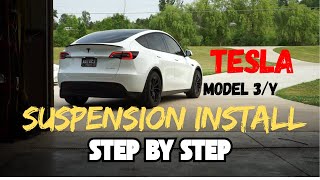
Replacing a strut is a job for an experienced DIYer or a professional. It requires specialized tools like a spring compressor (if transferring the old spring) and a way to safely lift and support the vehicle. 🎬 See this step-by-step walkthrough for a full suspension installation. A wheel alignment is required after replacement.
Key Torque Specs (Always verify with the latest Tesla Service Manual for your specific vehicle):
- Front Strut to Lower Control Arm Nut: 106 Nm (78.2 lb-ft) or 103 Nm (76 lb-ft)
- Front Strut Upper Mount Nuts (in frunk): 23 Nm (17 lb-ft)
- Rear Shock Upper Mount Nuts: 41 Nm (30 lb-ft)
- Rear Shock Lower Bolt: 115 Nm (84.8 lb-ft)
- Front Upper Control Arm to Body Bolts: 35 Nm (small bolts), 62 Nm (large bolts)
Important: Many Tesla suspension bolts are torque-to-yield and must be replaced. Furthermore, final torque on many bushings must be applied only when the suspension is at its normal ride height (loaded), not when it's hanging in the air. Failure to do this can preload the bushings and cause them to fail prematurely.
Frequently Asked Questions
Do I need to replace struts in pairs?
Yes, it is highly recommended to replace struts in pairs (both front or both rear). Because they wear out over time, replacing only one can lead to unbalanced handling and instability.
Is a wheel alignment necessary after replacing struts?
Yes, absolutely. Replacing a strut directly affects the suspension geometry and wheel alignment angles. Driving without a proper alignment will cause poor handling and rapid, uneven tire wear.
My suspension creaks when I turn the wheel. Is it the strut?
It could be the strut mount bearing, but it is very frequently the front upper control arm ball joint on the Model 3 and Y. This is a well-documented issue that causes a distinct creaking or groaning sound at low speeds. Proper diagnosis is needed to avoid replacing the wrong part.
Can I use an AWD strut on my RWD Model 3?
No. The front suspension components, including the struts, are different between the Rear-Wheel Drive and All-Wheel Drive (Dual Motor) models. They are not interchangeable. The same applies to the Model Y.
Helpful Videos
Cost Comparison
Technical Specifications
OEM Part Numbers: 1044032-00-C 1044090-00-A 1044092-00-A 1044364-00-E 1044364-01-E 1044364-01-F 1044364-01-G 1044369-00-E 1044369-00-G 1044369-01-F 1044369-01-G 1044379-00-E 1344365-00-B 1344365-01-B 1344366-00-B
Front Strut to Lower Control Arm Torque: 106 Nm (78.2 lb-ft). Front Strut Upper Mount Nuts Torque: 23 Nm (17 lb-ft). Rear Shock Lower Bolt Torque: 115 Nm (84.8 lb-ft).
We Have This Part in Stock



The information in this article is provided for general reference and educational purposes only. Vehicle specifications, procedures, and part compatibility can vary by production date, trim level, and region. Always consult your vehicle's factory service manual and verify part numbers before purchasing or performing repairs. Safety-critical components such as airbags, seat belts, and braking systems should be installed by a qualified professional.
- 🎬 Helpful Videos
- 🛍️ Shop This Part
- Critical Compatibility Warning: RWD vs. AWD
- Symptoms of a Failing Suspension Strut
- Known Issues, Recalls, and Technical Service Bulletins (TSBs)
- Recall: Loose Front Suspension Lateral Link Fasteners
- TSB: Creaking Front Upper Control Arms
- Buying a Used Tesla Suspension Strut: What to Look For
- Cost of Replacement
- Related Parts to Consider Replacing
- Replacement Overview and Torque Specs
- Frequently Asked Questions
- 🎟️ Get 10% Off
